Powering Engineering
Powering Solutions
Powering World
NPMAI ECOSYSTEM is an research and development company where our researchers contribute to AI Research, Physics Research, Chemistry Research, Bio-Engineering Research and civic tech tools Development.
NPMAI Ecosystem
Products grouped by the department that reserched and built them. Click Understand Project on any card for a full deep-dive — for both technical and non-technical readers.
System Architecture
How requests flow through the NPMAI ecosystem — from your code to the LLM and back. Three interactive diagrams below.
npmaiecosystem-load_balancer.hf.space
npmaiecosystem-loadbalancerfallback.hf.space
Research Papers
Original research from the NPMAI ECOSYSTEM — covering AI systems, democratic governance, and administrative theory. Click any paper to read the full content.
Technical research from the NPMAI ECOSYSTEM. Click any paper to expand.
Social and governance research. Click any paper to expand.
Chemistry research from the NPMAI ECOSYSTEM Research Chemistry Department. Click the paper to view the full research.
This paper presents a comprehensive technical case for direct semi-continuous aluminothermic co-reduction of TiO₂ and V₂O₅ to produce Ti-6Al-4V alloy in a single integrated three-chamber reactor system — bypassing chlorine chemistry and the Kroll process entirely.
- Partitioned three-chamber semi-continuous reactor
- V₂O₅ exotherm drives TiO₂ reduction
- Hybrid PESR + Calcium Vapor deoxidation
- Direct Ti-6Al-4V production (no separate alloying)
This paper presents a detailed technical investigation into Sorption-Enhanced Steam Methane Reforming (SE-SMR) with calcium oxide (CaO) as the integrated CO₂ sorbent — specifically designed for converting methane-rich flare gas into high-purity hydrogen while simultaneously capturing CO₂ at source.
- Optimised operating conditions for flare gas (650°C, S/C = 4–5, CaO/CH₄ ≈ 3)
- Bifunctional NiO-CaO-Ca₁₂Al₁₄O₃₃ catalyst
- Dual fluidized bed reactor design
- Full thermodynamic, kinetic, and stoichiometric derivations
- Geological storage vs CO₂-to-Methanol pathway comparison
This paper proposes an integrated route for converting ethanol into synthetic petrol-range hydrocarbons — combined with biogas SE-SMR upgrading — as a full chemical alternative to India's current raw ethanol blending policy, addressing the car-fuel compatibility gap directly.
Read Research Paper ↗One shared front-end (multi-sensor sorting, float–sink, ballistic) splits mixed post-consumer waste into three parallel trains that share water, heat, nitrogen and vacuum. The PET line uses hot caustic wash → glycolysis to BHET → full purification cascade → polycondensation to rPET chips (IV 0.62–0.70). The rubber line runs continuous twin-screw thermo-mechanical devulcanization with dry H₂S capture. The carbon line compounds black polyolefin pellets under vacuum. Revision 2 removes the acid leach, zeolite bed, bioreactor and H₂S-to-acid loop of Rev 1; restates economics with Lang 3.1, itemized opex and market-checked prices. At 200 t/day: ~$123 M capex, 19.5 % ROI. Chemical reset of PET avoids the progressive weakening of ordinary mechanical recycling.
Mathematics research from the NPMAI ECOSYSTEM Research Mathematics Department. Click the paper to view the full research.
This paper tackles one of the fundamental tensions in network theory: the gap between individually rational routing (Nash equilibrium) and socially optimal routing that minimises system-wide congestion. The research introduces a multi-criterion framework combining dynamic routing, equity-indexed congestion pricing, and bifurcation analysis to characterise when and how networks transition between stable and unstable regimes.
- Multi-criterion congestion control with heterogeneous agent preferences
- Dynamic routing algorithms converging to socially optimal solutions
- Equity-indexed pricing mechanisms preserving fairness while reducing Price of Anarchy
- Bifurcation analysis — characterising phase transitions between stable and unstable network regimes
- Formal proofs of convergence under generalised Wardrop conditions
- Applications to transportation networks, internet traffic, and resource allocation
Classical continuous-time Linear-Quadratic Mean Field Games (LQ-MFGs) typically restrict attention to simple linear drifts, quadratic costs, and interactions that depend only on the population average. This paper develops a generalized LQ-MFG that simultaneously incorporates asymmetric Ornstein–Uhlenbeck mean-reverting dynamics, a stochastic common noise shared by the entire population, a deterministic exogenous tracking trajectory, and a control–state interaction penalty. Using the Stochastic Maximum Principle, the coupled Forward-Backward SDE governing the representative agent is derived and, through a hierarchical affine decoupling ansatz applied at both the macroscopic and microscopic levels, reduced to two nonlinear Riccati equations and two linear ODEs — solved explicitly to yield a fully closed-form decentralized Nash equilibrium.
- Generalized LQ-MFG formulation with asymmetric Ornstein–Uhlenbeck mean-reverting dynamics
- Stochastic common noise shared across the entire population, alongside a control–state interaction penalty
- Coupled Forward-Backward Stochastic Differential Equation derivation via the Stochastic Maximum Principle
- Macro-level and micro-level affine decoupling reducing the system to explicit Riccati and linear ODEs
- Fully explicit decentralized Nash equilibrium — consensus-correction, stabilization, and anticipatory tracking terms
- Interactive simulated population dynamics model, corollaries, and structural properties of the equilibrium
Changelog
Release history for the npmai Python package.
The Founder
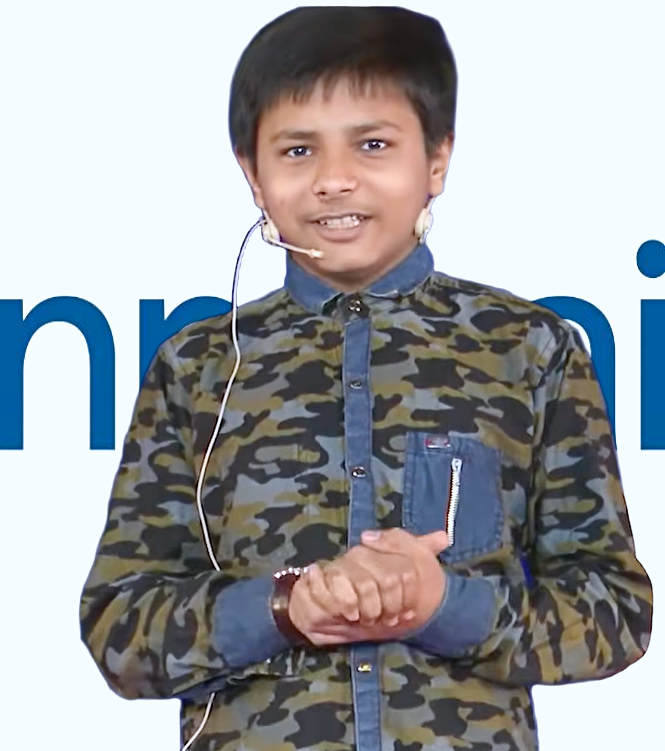
Sonu Kumar
Founder of NPMAI ECOSYSTEM · HOD Research Tech (CS, AI) · Bihar Viral Boy
Software Developer · AI Developer · Web Developer · Cloud Developer · DevOps · TEDx Speaker · Social Thinker · Researcher
Student at Allen Career Institute & Disha Delphi Public School, Kota (100% Scholarship, since 2022)
The Journey — How Sonu Kumar Went Viral
Contributor Hub
How you can contribute or join NPMAI ECOSYSTEM.
NPMAI ECOSYSTEM is a Research and Development Company. Here's how it works and handles this much work in Different Sectors without paying for servers,employees, or anything or charging anyone — through open contribution from Researchers and Developers worldwide.
Research Team
The minds behind NPMAI ECOSYSTEM's multi-department research programme. Each department is led by a Head of Department driving original research in their domain.
Sonu Kumar is a 15-year-old software developer, AI researcher, and TEDx speaker from Bihar, India — now studying at Allen Career Institute and Disha Delphi Public School, Kota on a 100% scholarship. He is the founder of NPMAI ECOSYSTEM, an open-source AI research and development community publicly known as the platform that makes frontier AI accessible to everyone for free, and goes by the name Bihar Viral Boy — a name he earned at age 11 after going viral across India for directly confronting the Bihar Chief Minister about education quality and the weak implementation of the liquor ban.
That moment turned into a life mission. Sonu has since become one of India's youngest TEDx speakers (at 13), built an ecosystem that has crossed 4.5 million downloads, published four original research papers — LARA (RAG architecture), Representative Ideal Democracy, Ideal Administrative System Theory, and Beyond the Remainder Term (Article 82B constitutional law) — and built a roster of production-grade tools including NPM Journalist, NPM Debater AI, NPM AutoCode AI, and NPM Legal AI. As HOD of the Research Tech (CS, AI) and Social Science (Political Science, Legal) departments, he connects cutting-edge AI engineering with original civic and constitutional thought.
His philanthropic impact extends to the people around him. When Brajesh Maheshwari (Co-Founder, ALLEN Career Institute) extended an offer of support to Sonu, that gesture of belief enabled him to study in Kota and continue building NPMAI ECOSYSTEM with the resources and environment he needed to grow — an act of trust he carries with him as both personal motivation and a model for what mentorship can unlock.
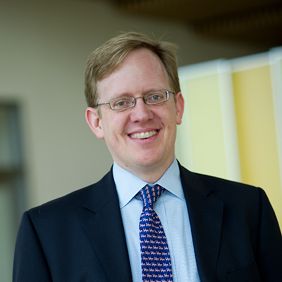
Dr. Taylor Fravel is an internationally recognized political scientist, security scholar, and academic leader — currently serving as the Arthur and Ruth Sloan Professor of Political Science and Director of the Security Studies Program (SSP) at the Massachusetts Institute of Technology (MIT). He is the pioneer of structural research into China's military strategy, publicly known for making complex East Asian geopolitical frameworks accessible to both academic institutions and global policymakers. He often goes by the name 傅泰林 (Fù Tàilín) in international circles — a Chinese name representing his deep, decades-long engagement with the country's historical archives, border dispute records, and strategic military doctrines.
That study of international relations became a lifelong mission. Dr. Fravel built an elite academic trajectory, completing his BA at Middlebury College, an MA at Oxford University as a Rhodes Scholar, an MS at the London School of Economics, and his Ph.D. at Stanford University. He has since published foundational monographs — including "Strong Borders, Secure Nation" (analyzing China's territorial disputes) and "Active Defense" (unpacking the evolution of China's military strategy) — alongside peer-reviewed research analyzing maritime security in the South China Sea. As a principal researcher, he bridges cutting-edge data analysis with original political and historical thought, serving on the board of the National Committee on U.S.-China Relations.
His broader impact extends to advising the global security community. When elite public frameworks require clarity on maritime escalations or military modernization, Dr. Fravel's research group provides the empirical analysis needed by government officials and defense analysts to navigate volatile scenarios. This dedication to mentorship and policy advisory serves as a model for how high-level academic research can be deployed to maintain stability, de-escalate flashpoints, and guide international diplomacy.

Lokesh Chaudhary is a software engineer by training, having completed his B.Tech from Banaras Hindu University, where his interest in building systems first took shape alongside an equally strong pull toward physics and the natural sciences. That dual interest — engineering discipline paired with scientific curiosity — has shaped the way he approaches both his work and his teaching ever since.
Long before he took on the CEO role at NPMAI Engineering Solutions, Lokesh was already teaching — passing on programming and robotics to Sonu Kumar in the earliest days of what would become NPMAI ECOSYSTEM. He has been with the organization since its founding, moving from mentor to co-builder as the ecosystem grew from a single Python package into a multi-department research and engineering company.
As CEO, his vision for NPMAI Engineering Solutions is straightforward: research should not stop at publication. Every physics, chemistry, and bio-engineering problem the department takes on should end in something that can be built, tested, and — where it is industry-feasible — manufactured and put into people's hands.
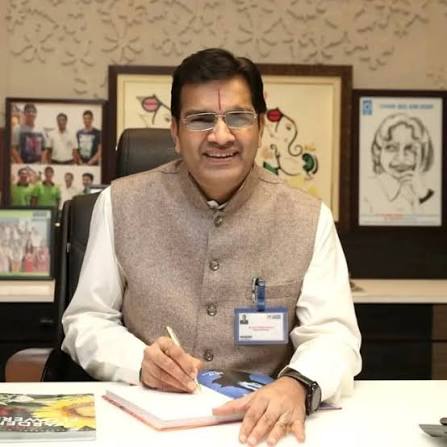
Dr. Brajesh Maheshwari — widely known among students as BM Sir — is one of the most influential educators in India and a driving force behind Kota's transformation into the coaching capital of the nation for engineering and medical entrance examinations. As Co-Founder and Executive Director of ALLEN Career Institute, he built — alongside his three brothers, Govind, Rajesh, and Naveen Maheshwari — an institution that has shaped the academic trajectories of millions of students.
A gold medallist in Civil Engineering from NIT Surat, BM Sir chose teaching over traditional engineering — and that choice created a legacy. He serves as Head of the Physics Department at ALLEN, actively teaching and structuring the physics curriculum for competitive examinations at the highest level. His motivational sessions, broadcast live to students across India, are not supplementary content — they are a lifeline for lakhs of young people battling examination pressure, self-doubt, and the weight of family expectations.
Beyond academics, BM Sir is a philanthropist whose belief in people has changed lives. When Sonu Kumar — a teenager from a village in Bihar who had gone viral for confronting the state Chief Minister about education — came to Kota, it was BM Sir's extended hand of support that enabled Sonu to study at Allen Career Institute and build NPMAI ECOSYSTEM. By adopting Sonu Kumar's education and giving him the environment to flourish, BM Sir became not just a mentor but proof of his own mission: that the right person, at the right moment, can alter the entire trajectory of a young life.
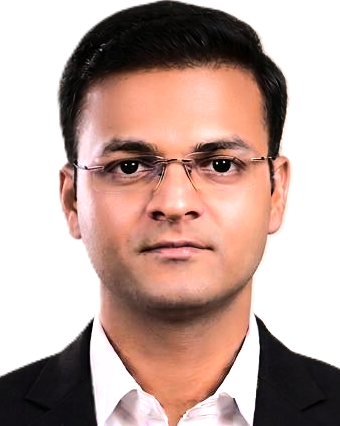
Lal Bahadur's relationship with electrical systems began the way it does for most engineers who go on to teach: with a habit of asking why a circuit behaves the way it does rather than simply accepting that it does. That habit carried him through school as an HSC State Board topper, and into a B.E. in Electrical Engineering, which he completed in 2020 as the University Topper in his branch — a distinction recognised with the Chancellor's Award for outstanding performance during graduation.
The same year, he cleared GATE 2020, confirming the technical and analytical grounding his coursework had built. Rather than stopping at the boundary of his own discipline, he chose to push further into the physics underneath it, and is currently pursuing a Master's in Physics — a decision that reflects his belief that electrical engineering is best understood as applied physics, not a separate field. Alongside this, he teaches as Physics Faculty at ALLEN Career Institute, where discipline, conceptual clarity, and commitment to students are the values he brings into every classroom.
At NPMAI ECOSYSTEM, Lal Bahadur leads Electrical Engineering R&D within the Department of Physics, with a vision to bridge engineering and physics and to inspire students to excel in both academics and competitive examinations.
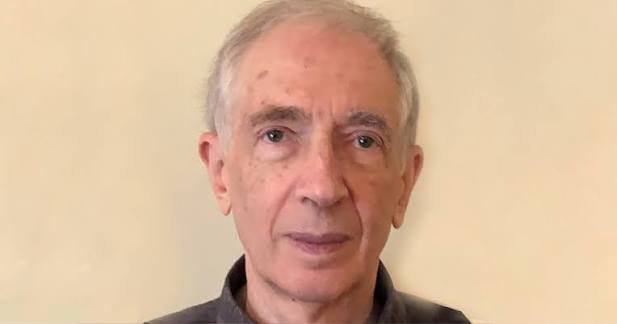
The relationship between Richard Stanley and mathematics did not begin with dry formulas, but with a boyhood fascination with puzzles, games, and chess. Growing up, what drew him in was the hidden structure beneath the board—the realization that patterns could be analyzed, classified, and solved. While other students saw math as a chore of memorization, Stanley saw it as a playground of infinite logical combinations. That early curiosity set the trajectory for his entire life.
His academic journey led him to Caltech, where his passion for the discipline deepened, earning his undergraduate degree in 1966. He then moved to Harvard, where he met the legendary mathematician Gian-Carlo Rota. Rota became his advisor and introduced him to the world of modern combinatorics—a field that was, at the time, often dismissed as a scattered collection of isolated riddles rather than a serious branch of higher mathematics. Stanley saw exactly how vast and interconnected this world could truly be.
Transforming the field required immense discipline and a completely new way of thinking. Stanley began bridging the gap between combinatorics and abstract algebra, pioneering the field of algebraic combinatorics. His perseverance paid off when he joined the faculty at MIT, where he spent decades mentoring generations of mathematicians and writing "Enumerative Combinatorics," the definitive textbook that standardized the field. Progress in mathematics, as his career proved, requires organizing chaos into beautiful, linear structures.
For Stanley, mathematics became famously embodied by the Catalan numbers, a sequence he championed by finding over 200 distinct ways they appear in nature and logic. It is a way of thinking—feeling like a cartographer mapping out an uncharted continent of patterns. His enduring legacy is clear: he took a fragmented subject and turned it into an internationally recognized, rigorous mathematical discipline.
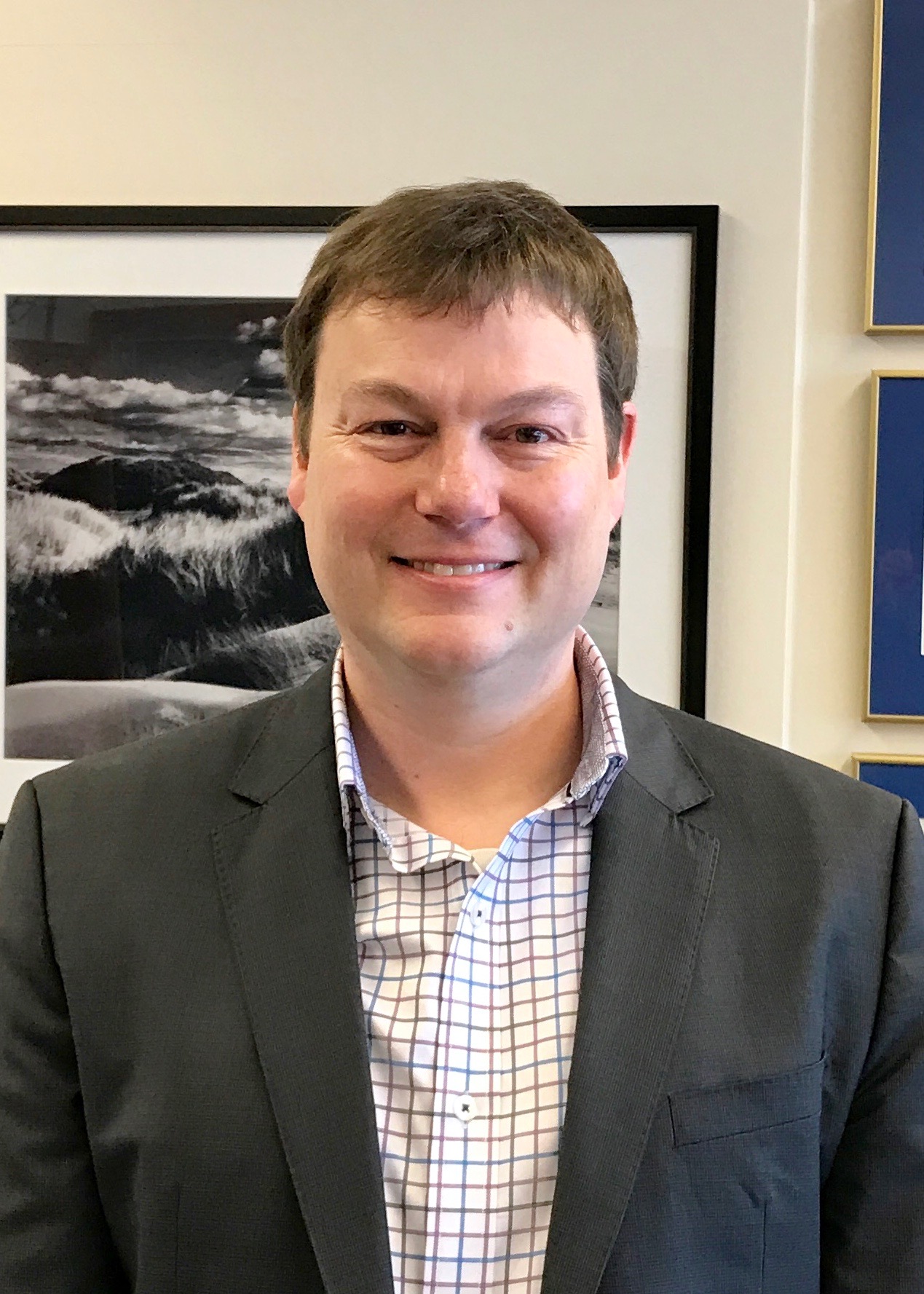
The relationship between Dr. Matthew B. Francis and chemistry did not begin with routine laboratory procedures, but with a deeper curiosity about molecular architecture. During his undergraduate years at Miami University, what drew him in was not just observing chemical reactions, but understanding how to manipulate organic compounds at the atomic level. He saw chemistry as a powerful tool to build complex, functional structures from scratch. That early drive led him to Harvard University, where he earned his Ph.D. under the mentorship of legendary chemist Eric N. Jacobsen, mastering the intricacies of synthetic organic chemistry.
Now serving as the Chair of the Department of Chemistry at UC Berkeley, Dr. Francis has spent decades building a world-renowned research program. His work systematically bridges the gaps between disciplines that are most powerful when they talk to each other: organic synthesis, chemical biology, polymer chemistry, and materials science. Instead of viewing proteins simply as biological entities, the Francis Lab treats them as unique, programmable building blocks to engineer entirely new classes of advanced functional materials.
In biomedical innovation, Dr. Francis is globally recognized for developing highly specific chemical reactions to modify protein surfaces, enabling the creation of targeted drug delivery systems. His team utilizes hollow virus capsids as molecular carriers to transport therapeutic payloads directly to cancer cells. Beyond medicine, his research extends to sustainable technology and materials science. The lab actively develops synthetic protein matrices capable of filtering toxic heavy metals from drinking water, alongside artificial light-harvesting systems designed to advance solar energy materials.
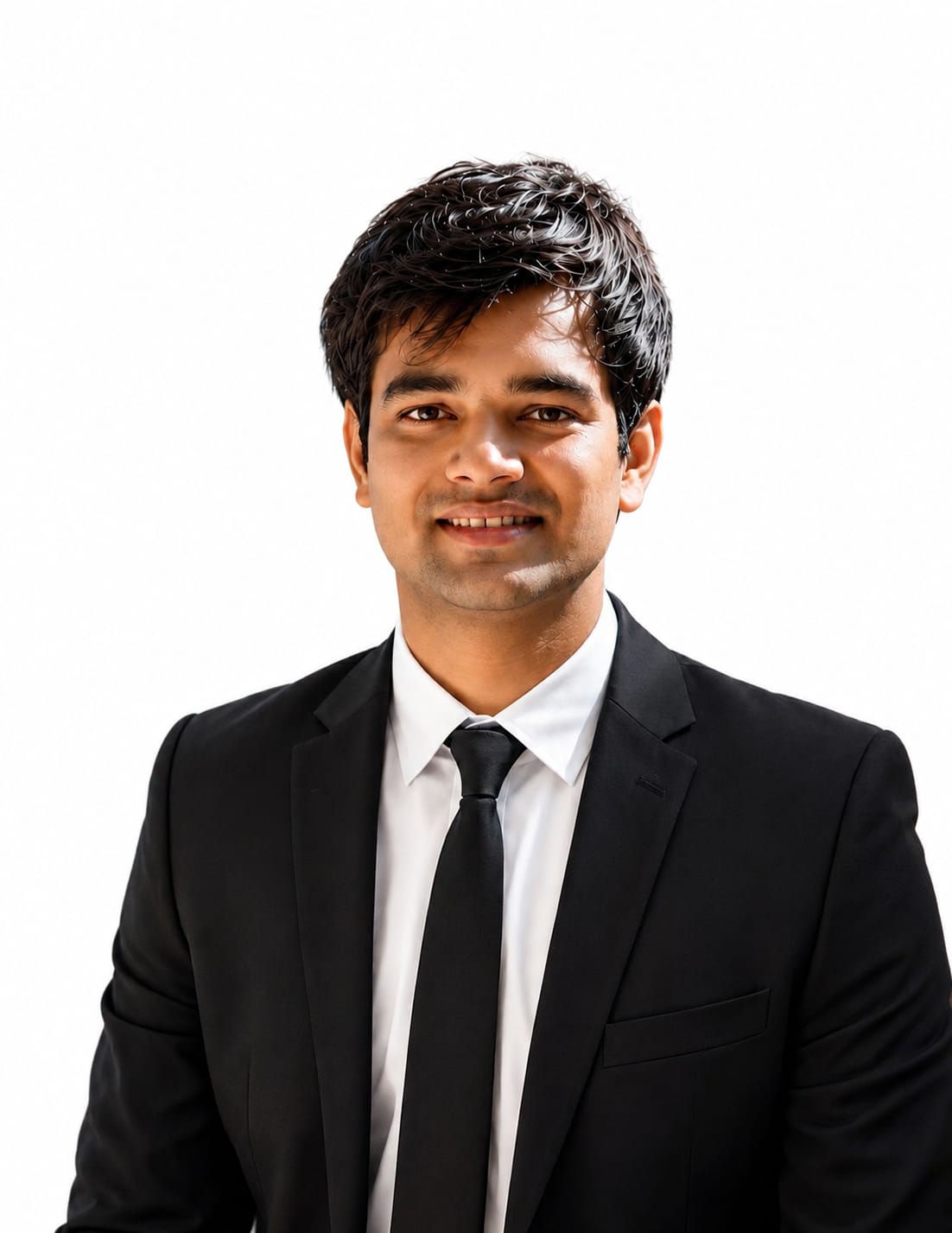
Dr. Rutvik Jain came to bio-engineering by way of medicine. As a practicing doctor, he spent years seeing firsthand where healthcare access breaks down — not just in diagnosis or treatment, but in the cost and availability of the tools that make good care possible in the first place. That vantage point later shaped his work as Head of Allen NEXT, the NEET PG preparation platform launched by ALLEN Career Institute, where he helped structure how thousands of aspiring doctors prepared for postgraduate medical entrance.
At NPMAI ECOSYSTEM, he now leads the Bio-Engineering Department, where the mandate is deliberately broad: develop solutions to environmental and medical problems that are currently blocked by cost or complexity — from affordable diagnostic tooling to materials that address environmental waste at the source.
His approach mirrors the rest of NPMAI Engineering Solutions' philosophy — research is only the first half of the job. The department's goal is to take medical and environmental problems that are usually left to expensive, hard-to-access solutions, and build alternatives that are actually reachable.